A reading tracker should make a chosen reading habit visible without turning every book into a competition. Decide what the reader wants to notice, give them enough space to record it, and keep the system simple enough to use on a busy day.
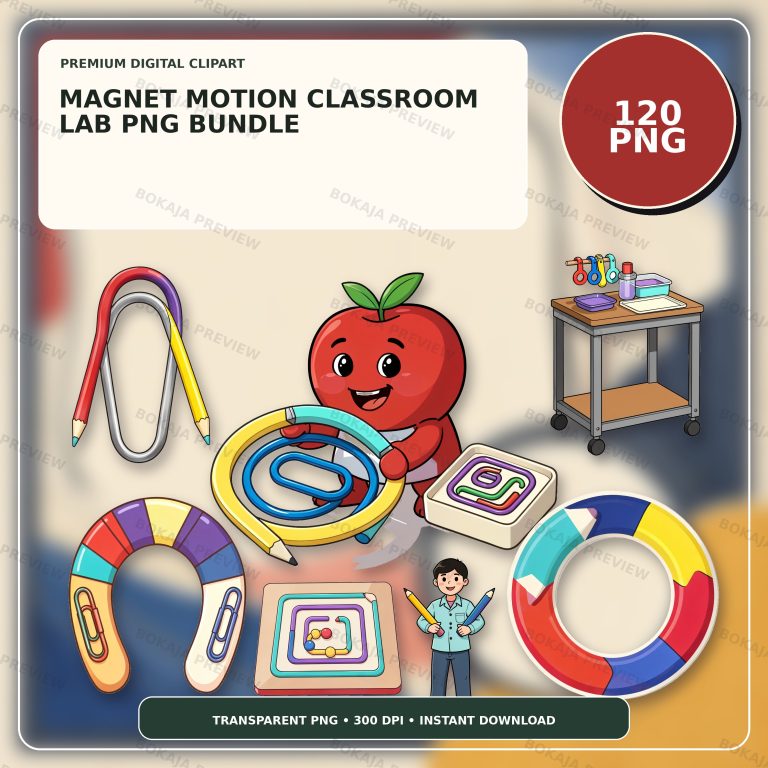
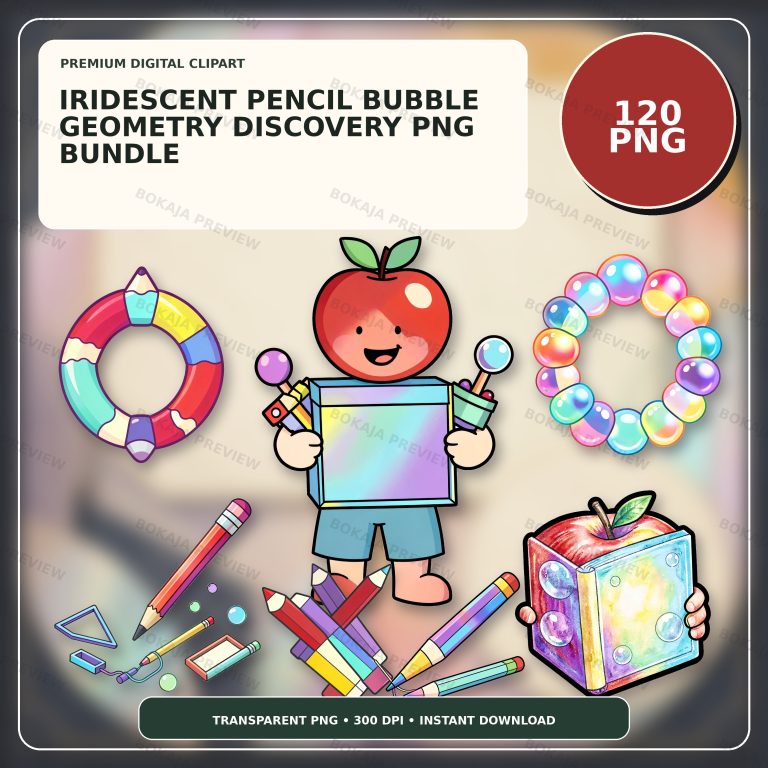
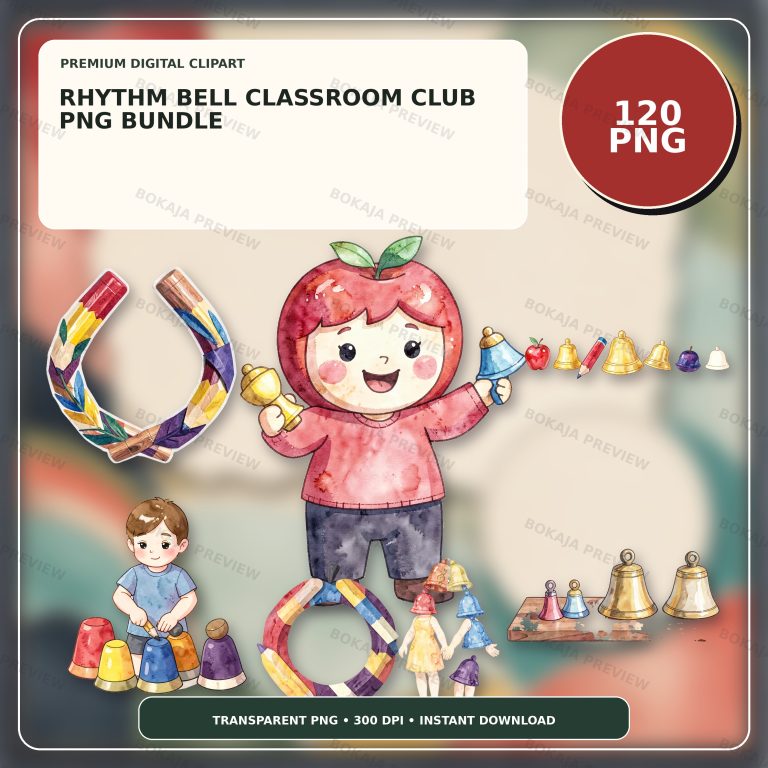
Choose Storybook Pencil & Book Club for the tracker heading, or Autumn Woodland Deer Acorn Library for a seasonal reading page. Both are paid PNG artwork collections for layouts you design yourself; add your own text, shapes and measurements.
Make it with these Bokaja sets
Choose the style that fits your project. These are digital PNG artwork collections: add your own text and build the layout shown in this guide.

Storybook Pencil & Book Club
Book-club artwork for the tracker heading.

Autumn Woodland Deer Acorn Library
Woodland library artwork for a seasonal reading page.
Worked example: a four-week tracker with room for reflection
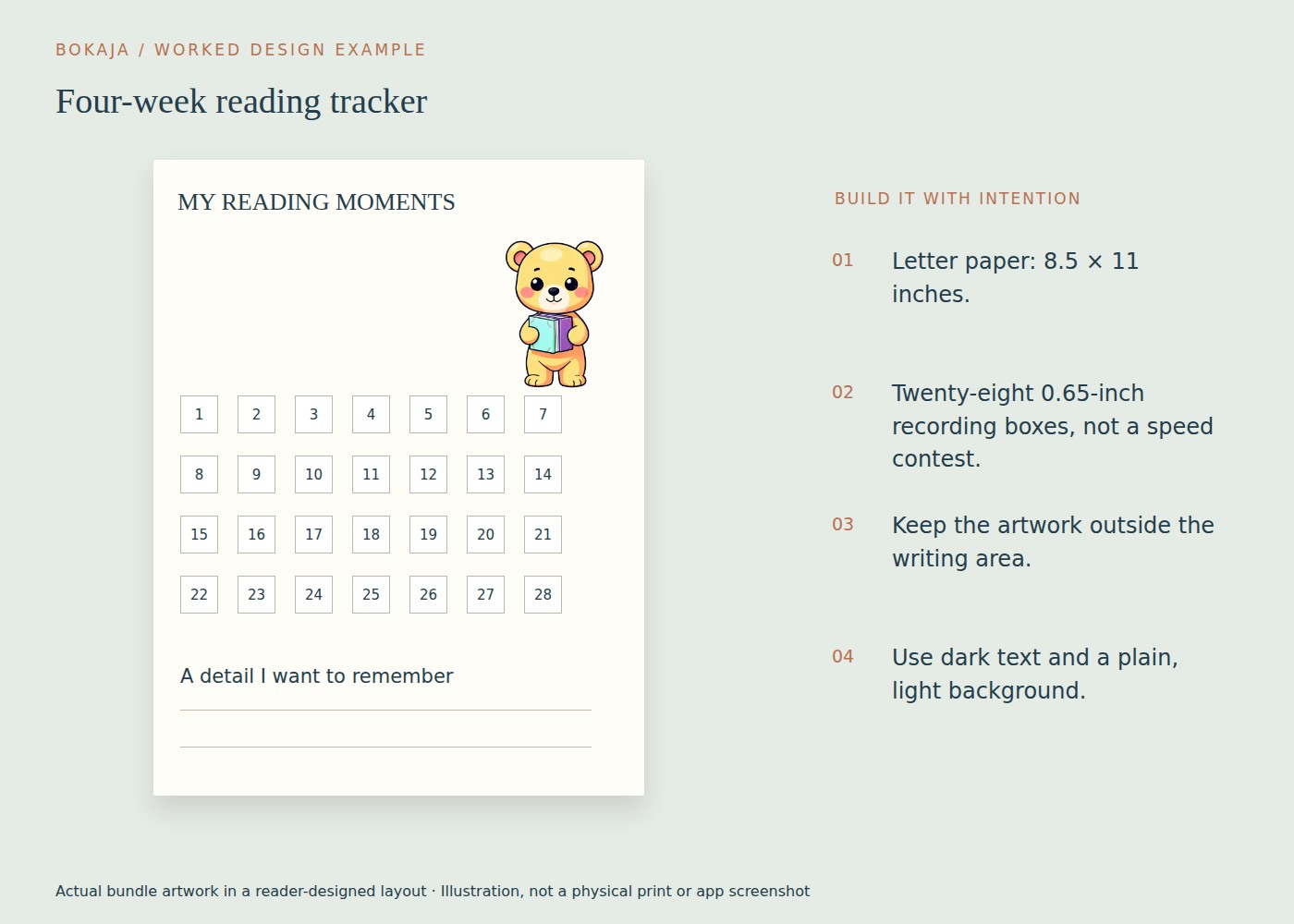
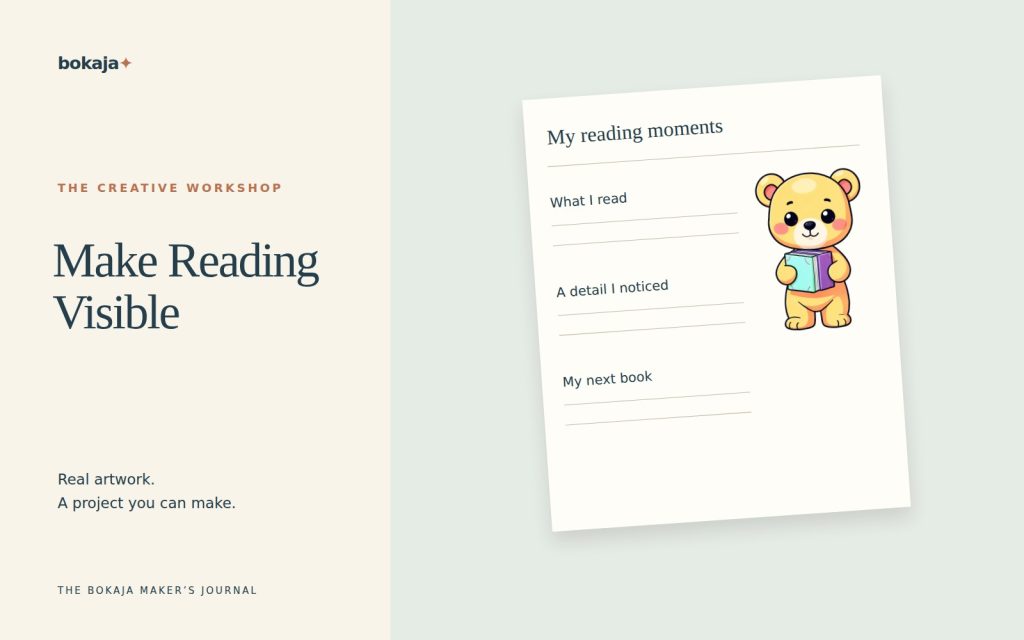
Make a Letter-size page for the question “Did I make time to read today?” This records a chosen habit, not reading ability. Use one book-club illustration in the heading and leave the recording area quiet.
Create a 7.5-inch-wide content area inside half-inch side margins. Draw seven 0.65-inch boxes across, separated by 0.15-inch gaps. The row uses 5.45 inches: 7 × 0.65 + 6 × 0.15. Use the remaining width for a short week label and comfortable spacing rather than enlarging decoration.
Duplicate the row four times. You now have 28 recording spaces, so label the page “Four weeks of reading,” not “September” or “A complete month.” Leave a 2-inch-deep area below the grid for one prompt such as “A sentence or idea I want to remember.” Add a date range so the reader can start on any day.
Choose a mark that fits the reader’s goal: a dot for a reading session, a tiny note of what was read, or a symbol for listening to an audiobook. Decide this before use. Otherwise, a blank square may ambiguously mean “did not read,” “forgot to record” or “read in a different format.”
For a child or shared household activity, let the reader choose what to share. A private bookmark-sized note can be more comfortable than a public wall chart. Avoid assigning larger decorative rewards to longer books if the goal is simply making time to read.
At the end of four weeks, review one practical question: was the tracker easy enough to keep using? If not, try weekly notes instead of daily boxes. Keep the artwork and page structure if they are helpful; change the recording method before abandoning the whole idea.
Choose one primary measure
Ask what the tracker is for. A reader rebuilding a habit may prefer marking days with some reading. Someone following a long novel may want a progress bar. A book club may care more about one thought from each chapter than a page total.
Avoid combining minutes, pages, completed books and points unless there is a clear reason. Too many measures create extra recording work and can distract from reading itself.
For a child’s tracker, agree on an achievable and flexible approach with the child and relevant adult. Reading formats and support needs vary. Do not treat a short picture book and a long chapter book as directly comparable achievements simply because both count as one title.
Add a reflection that earns its space
Choose one prompt, such as “A part I want to remember” or “Something I wondered.” A single useful prompt is better than a crowded worksheet full of compulsory questions.
For younger readers, drawing can be an alternative to writing. For a book club, a page reference or a question for discussion may be more practical. The tracker should fit the activity, not force everyone to produce the same kind of response.
Leave room for the title and author when those details will help the reader find the book again. Avoid collecting unnecessary personal information on a page that may be displayed publicly.
Use clipart as a cue, not a scoring system
A small illustration can identify the tracker or make it feel personal. Put it in a corner or heading area rather than filling every recording box with artwork.
Keep the writing areas plain. If the design will be printed repeatedly, a light border and one modest image also use less ink than a full-page background.
Make the print comfortable to use
Create the page for the paper available, such as A4 or US Letter. Keep the recording boxes large enough for the intended pen, sticker or mark. Print one copy and try entering a realistic title and reflection.
Check contrast in grayscale if the tracker may be photocopied. A pastel color difference that looks clear on screen can disappear on a classroom copier. Do not rely on color alone to distinguish completed and uncompleted sections.
The Canva beginner workflow can help with placing PNG artwork while keeping text and grid elements editable.
Review the tracker rather than judging the reader
After a week, ask whether the tracker is helping. Is it quick to complete? Does the chosen measure still make sense? Does it encourage noticing books, or does it create pressure to rush through them?
Change or simplify the design when needed. A blank box can mean illness, a busy day, a different reading format or simply a decision not to record. It should not automatically be interpreted as failure.
If you use rewards, keep them appropriate to the setting and avoid public rankings. A shared conversation about a favorite passage may be more meaningful than comparing who filled the most boxes.
Keep the next version easy
Save the editable master and make a fresh copy for each period. Let the reader change the goal or theme without rebuilding the whole layout. The best tracker is one that stays useful as reading habits change—not one that is too elaborate to revise.
Your next step
After four weeks, keep the recording method only if it helped. A useful tracker makes room for reading and reflection; it does not need every box filled to justify the page.
Start with Storybook Pencil & Book Club, or choose Autumn Woodland Deer Acorn Library for the alternative theme described above. These collections supply PNG illustrations for your own layout; the project text and construction remain yours.
For commercial or shared deliverables, check the current artwork licence for the intended use.